A side shell that shows closed while the seal is still chewing water. A garage leaf that will not pin because a limit painted early. A tender bay open in a roll while the page still looks calm. Captains do not google yacht shell door control because they want a brochure about hull plating. They google it because the watch already knows which opening lies about made, and the next weather turn will not wait for a yard quote.
Yacht Automations builds the panel around those openings. Custom yacht controls for build-outs and retrofits. Our team of electrical engineers can get it done. Fort Lauderdale, FL and Newport, RI. PLC control panels, yacht door systems, passerelles and boarding bridges, and the automation around those. Guest lighting can wait. A shell door that paints sealed while the sill is wet is a flood problem, not a brochure problem.
We already wrote the wider door story. A yacht door control system covers watertight, fire, hinged, and sliding leaves when the page starts lying about open and closed. Yacht watertight door control is bulkhead flood integrity: class close-at-sea, dogs that must hold when the weather turns. Sliding and fire leaves got their own pages. This page is neither essay. This is shell doors specifically. Hull and side openings. Garage and tender-bay leaves. Seal make. Pin and lock. Interlocks that keep an opening from looking closed while the sea still owns it.
What yacht shell door control actually means
Yacht shell door control is the sequence that takes a hull opening from open to sealed, and tells the truth about every step. A bulkhead WT leaf keeps compartments apart. A shell door is the hole in the skin. Side shell for boarding or stores. A garage leaf for a tender. A hull door that becomes a beach club when the weather is kind. Different iron. Same honesty problem. The page has to know open, traveling, closed, sealed, pinned, and fault as states the watch can act on. Open and closed after a timeout is already a lie about the sea.
Local stations belong where people can see the sill and the seal. Deck gets hold-to-run with a view of the opening. Wheelhouse or ECR gets status, fault, and the right to stop. Flip that and you get a close from a chair while a deckhand is still on the sill. Audible before motion, because a shell opening is a blind corner on a lot of hulls once the leaf starts moving. Hold-to-run with eyes on the track beats a remote that nobody trusts after the first pinch.
Hydraulics are common on big leaves. Electric drives show up on smaller side shells. Both can be sound. Both can lie when the controller only knows open and closed. Shared oil on a ship ring will make a garage leaf look haunted when a crane steals flow mid-stroke. A work-port pressure guage that stays soft while the rail looks fine is the tell. Soft. Then a bang. Then a bosun who will not stand in the opening. Treat the shell door as one more function on that plant, with its own confirms, not as a special exception that gets to skip the queue.
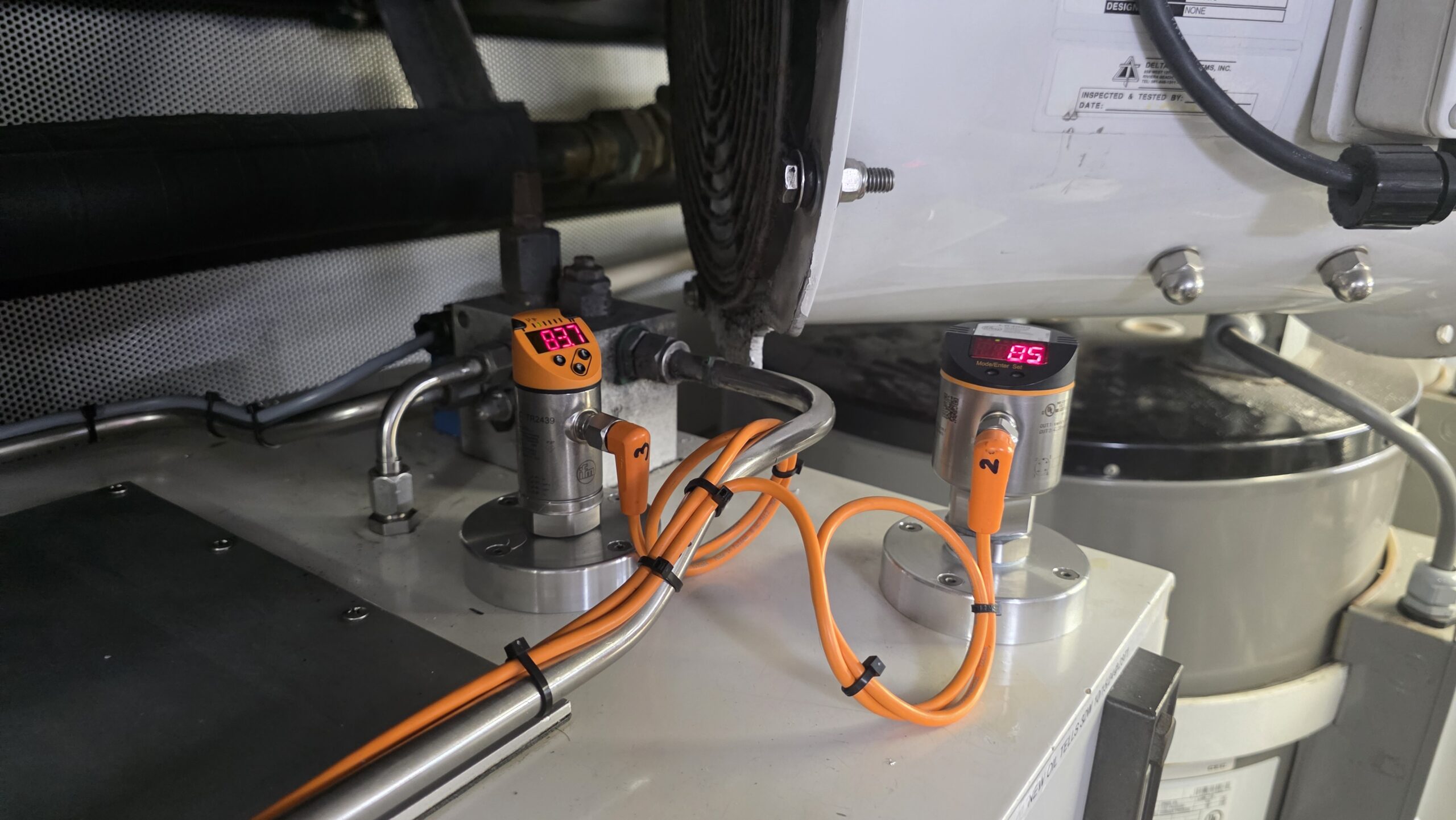
WAGO PFC200 class controllers, Beijer HMI pages, and IFM sensors when the field needs a digital confirm are tools you can still buy. Spare I/O and a spare proximity beat a discontinued OEM shell-door CPU that only talks to that one cover. Photograph the nameplate. Trust that more than a faded schematic from a yard that no longer answers the phone.
Why yacht shell door control fails underway
The leaf is rarely the first thing to go. The story starts smaller. A proximity that got painted over and no longer sees the leaf at the rebate. A rotary that fogged and now reports last Tuesday. A seal switch that only makes when the boat is sitting level. The page still looks fine. The shell door has already taught the crew not to trust it in a seaway.
Seal that will not make is the failure captains remember. Leaf in the rebate. Page paints closed. Water still finds the sill. Soft seal. Debris after a yard week. A latch that needs a shove. The mimic called the job done because the command finished, not because the seal made. Timeouts that paint green are not confirms. If a close is commanded and the sealed state never arrives, stop and alarm. Do not leave the watch guessing whether the hull is still open to the sea.
Pin and lock honesty is the cousin. Leaf looks shut. Pin never seated. Lock never threw. Someone walks over and kicks it home. That workaround becomes the procedure. The next watch does not get the memo. Then a roll, and the leaf that was "closed enough" is the finding the surveyor writes down. Dogs and pins, when the leaf uses them, belong in the closed story. Leaf in the rebate is not the same as made.
Then the electronics age out. A proprietary shell-door interface nobody stocks. A pendant that only talks to that one cover. The leaf still runs true. The seals still seal when you clean them. The cylinders still stroke. The quote that wants a new door anyway is selling you steel you do not need. Keep the sound leaf and actuators. Replace the brain with hardware you can still buy. That is the whole refit, more often than vendors admit.
Yacht shell door seals pins and interlocks
Seals exist so a hull opening can stay dry when the leaf is home. They also fail in ways that look like nothing until the first green water. Compression set. A torn lip. A switch that chatters. A jumper left in after a yard week because someone needed the garage clear for paint. That jumper is how a soft finding becomes a hard one.
Test seal make as a confirm, not as a courtesy lamp. Local tests are useful. They are not the same as a bridge view that says sealed only after the switch made. If the page paints sealed when the seal switch is still open, you have not proven the path the watch will trust at sea. Write which path was tested. Photograph the seal face, the switch, and the terminal labels. Those three pictures beat a brochure every time.
Pins and locks have to finish without a babysitter. A tired cylinder that needs a hip bump is not a shell door. Adjust it. Replace the pin actuator if it will not seat. Do not teach the crew that "almost pinned" is good enough for the hull. The PLC should see traveling, closed, sealed, pinned, and fault as separate states the watch can act on. Seal open after close is an alarm in English, not a silent retry. Pin timeout is an alarm. Mismatch between commanded and confirmed is an alarm. Interior graphics should not be able to defeat a sea interlock. If the glass on the HMI cracks, the shell doors should sit in a defined state, not a random one. Ask that in the first meeting. What still runs, and what is locked out on purpose.
Yacht shell door vs watertight bulkhead control
Honest split. Watertight bulkhead doors keep compartments apart when the hull is already intact. Shell doors are the openings in the skin. Some leaves are both in spirit: a side shell that is also classed as watertight when closed. Then you inherit both rule sets, which is where a generic door page gets people hurt. Do not collapse shell and WT into one brochure paragraph because both are "doors."
WT care is remote close, audible at the leaf, local both sides, and a closed state that includes dogs when dogs exist. Shell care is seal make, pin and lock, sea interlocks, and a view that does not paint sealed while the sill is still open to weather. Shared hardware can still mean separate pages. Shared I/O can still mean separate alarms. A captain who has lived through a wet garage and a bad WT find already knows those are different nights.
Garage and tender-bay leaves borrow mid-travel honesty from any big moving leaf. Side shells borrow local-station honesty from boarding work. The shell-specific piece is the seal path and the sea interlock. If your current package has a pretty interior mimic and no sealed-versus-closed split, write that down before the next surveyor does.
Permissions matter in the same boring way they matter on hydraulics. Deck should not hunt through guest graphics to see a shell-door fault. The engineer should not need an interior login to confirm a pin. One hardware family can still be several views. Ask for the split in the spec, not as a favor after commissioning.
Obsolete shell door electronics keep the leaf
Obsolete OEM shell-door electronics are a control job first. The leaf and seals can still be true while the interface board is a paperweight. Keep sound iron. Change the brain. That pattern shows up across the boat, not only on doors. One named example is enough. On a 46m Trinity Yachts (2002) hydraulic control refit, Koopnautic and Quantum aged out. Tanks, pumps, and valves stayed. The brain moved to a WAGO PFC200, a Beijer X2, and IFM where the field needed a digital eye. Shell door work follows the same idea when the leaf is honest and the OEM shell interface is not.
Control-only scope is the yard list you write on day one, or it will not stay that way. A dead seal switch does not mean the leaf must go. A jumpered interlock does not mean the whole station must go. A fogged proximity does not mean the cylinders must go. Replace the part that lied. Leave the part that still tells the truth. Plant work waits for a bent leaf, scored sill, or seals that no longer seal. Do not buy a new shell door for a lying page.
Commissioning ends when open, traveling, closed, sealed, pinned, and fault are states the watch believes. Local lamps at the opening, plus the bridge or ECR mimic, and they have to be independent of the command. A failed output should not paint a green sealed. Power loss should leave the leaf in a defined state, with manual overrides the crew can still find. Ninety seconds of a real override beats a garage full of people watching someone hunt for a release.
Fort Lauderdale and Newport yard window for shell door control
Fort Lauderdale is where a lot of this lands, because that is where the boats already sit for other work. Newport the same, in season, with a shorter window. Yacht shell door control fits those windows when the scope stays control-only and the leaf and seals are already sound. Discovery fills the window if day one has no photos of the sill, the seal switches, the local stations, the HMI, and any nameplates that still exist.
Bring a short list of what the watch already does not trust. Which leaf paints sealed early. Which pin needs a kick. Which interlock got jumpered for a yard week and never came back. Without that, a two-week controller job becomes a quote for steel you do not need. After the yard, the crew needs a name, not a generic inbox: who answers when a seal switch fails, where the spare proximity lives, which page still runs if the glass cracks.
We would rather keep supportable shell doors than sell you a leaf you do not need. Custom yacht controls for build-outs and retrofits is the whole offer. The homepage at yachtautomations.com is the short version. This page is the shell-door version the watch can use when the seal will not make.
What to ask before yacht shell door control work
Bring a short list. You do not need to become a PLC programmer. You do need answers a chief can live with after the yard leaves.
- Which openings are side shell, garage, or tender-bay, and which states the page can actually confirm
- Whether sealed and pinned exist as states, or only open and closed after a timeout
- Seal switch and pin confirm: honest in the field, or jumpered for the season
- Local hold-to-run with a view of the sill versus wheelhouse remote: who can move it, who can only stop it
- Hydraulic pack or electric drive, and what confirm matches that drive
- Shell-only leaf versus combined shell and watertight class: same honesty, different rule sets
- What stays: leaf, seals, cylinders. What goes: OEM interface, jumpered interlock, fogged limits
- Who the crew calls after Fort Lauderdale or Newport, by name
If a vendor cannot answer those without inventing hull numbers or promising a full door swap, keep looking. Yacht shell door control is the seal job first: a leaf that makes, a pin that seats without a babysitter, and a page that does not paint sealed while the sill is still open to the sea. The watch should get a sequence they can trust in a seaway, not only at the dock.
Send photos of the sill, the seal face, the local station, and the HMI to kyle@yachtautomations.com to start. Caleb will tell you whether the PLC can drive the opening that is there. Adam will tell you whether the switches and pins are the job. Kyle will tell you whether the Fort Lauderdale window, or the shorter Newport one, can take a controller you can still buy. We would rather keep supportable shell doors than sell you iron you do not need.