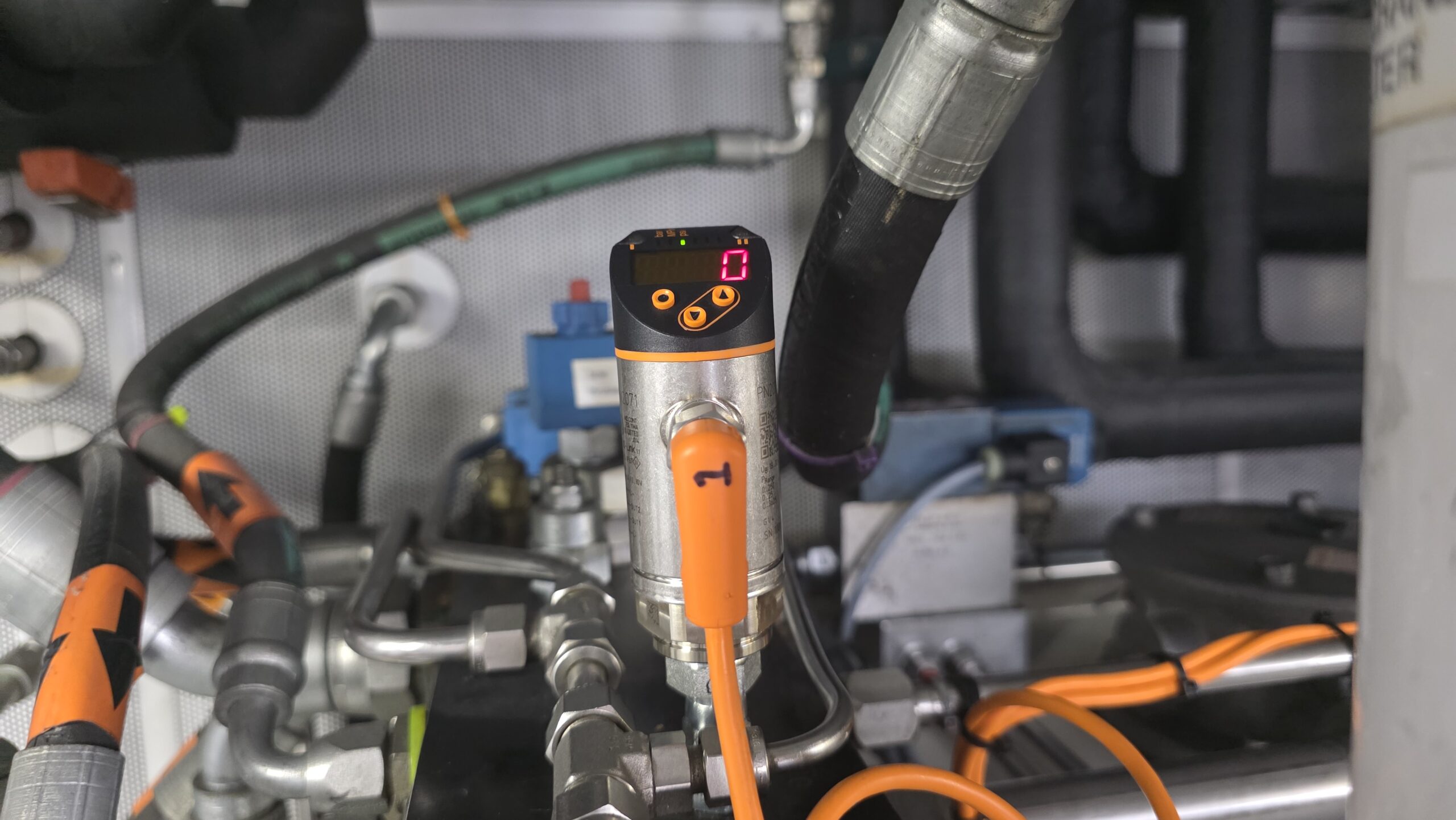
Nobody calls us because the boat needs more apps. They call because a door did not show closed, a hydraulic page went stupid, or the night watch spent forty minutes walking spaces that a screen should have already cleared. Yacht automation matters to captains for the same reason a good standing-orders book matters. It cuts the number of times a human has to be in two places at once, and it makes the remaining callouts real.
This is not an owner brochure. Owners care about how the boat feels when they step aboard. You care about whether the boat is safe, whether the crew is drowning in nuisance alarms, and whether the plant will still answer in a seaway. Those are different jobs. The systems overlap. The priorities do not.
Why yacht automation matters when something fails at 0200
Safety on a yacht is mostly boring until it is not. Watertight doors. Hatches. Fire zones. Bilge. Hydraulics that move heavy gear over people. Stabilizers in a beam sea. None of that should depend on someone remembering to look. A control system that actually monitors those points, and that puts a clear alarm in front of the watch, is the difference between a logged event and a bad morning.
Skip the novelty door that closes itself for the photo. Door status you can trust, so watertight integrity is not a rumor. Real-time alarms on hydraulics, cranes, and stabilizers. A fault as a sentence on a screen, not a bang on deck. Emergency lighting and power behavior that you have already seen in a test, not in a blackout. Fire-system monitoring that tells the bridge something useful instead of a single lamp that means “go find out.”
Class is in this conversation whether you want it or not. Lloyd’s, DNV, Bureau Veritas. They do not grade your interior iPad. They grade whether alarms are presented, whether you can show what happened, and whether critical functions have a path that still works when a panel dies. A yacht that looks automated and surveys like a bag of isolated boxes is a captain’s problem at the next dry-dock, not an owner’s problem at the next cocktail hour.
The ugly version of “we have automation” is a boat with twelve vendor screens and no one picture of the vessel. Callouts bounce. The engineer is on the radio asking the bosun what the crane panel said. The bosun is asking interior why a door shows open. That is workload. It is also how small faults get walked past.
How yacht automation cuts crew workload without cutting standards
Crew size is not going up. Guest expectation is not going down. That squeeze lands on the people who actually run the boat. Lighting scenes, climate zones, AV, access, hydraulic auxiliaries. If every one of those is a seperate remote and a different brain, interior and deck spend the day being the integration. That is a stupid use of a good crew.
Good automation does not replace seamanship. It stops the crew from doing the same ten button-presses every time the owner wants the sundeck at dusk, or every time you change from night cruising to guest mode. One platform for lighting, climate, and the related loads means the watch can set a state and go back to the thing that actually needs a human. Guest comfort is a side effect. The point, for you, is fewer steps and fewer chances to leave a space in the wrong state.
Think about a night departure. Interior wants cabins dark and quiet. Deck wants safe working light and a passerelle that behaves. Engineering wants to know the plant is not fighting a lighting load that someone left in “party.” If those are three phone calls, you will get one of them wrong when it is blowing. If they are scenes and statuses on a system the crew already uses, you leave the dock with fewer radios in the air.
Same story with climate. A zone that silently dies does not just make a cabin sticky. It hides a seawater or electrical problem until the guest mentions it, which is the worst possible way to find out. Monitoring that shows a space falling off setpoint is crew information. “Unparalleled guest comfort” is the brochure sentence. The working sentence is: we knew the starboard guest cabin HVAC dropped before anyone slept in it.
What captains should demand from yacht alarms and monitoring
Alarms are where a lot of yacht automation earns a bad name. Too many. Too quiet. Too cryptic. A wall of yellow that everyone acknowledges with their thumb and nobody reads. That is worse than a simple panel, because it trains the watch to ignore the system you paid to install.
Ask for a short, brutal list. What alarms are safety. What alarms are equipment protection. What alarms are “fix it this week.” If the integrator cannot separate those, they have not finished the job. On hydraulic gear (windlass, crane, thrusters, fins) you want state, interlock, and the reason a sequence stopped. On doors and hatches you want open/closed you can believe. On tanks and bilge you want a number and a trend, not just a light.
We use industrial hardware for this because it is what survives the boat: WAGO for control, Beijer for the crew interface, and hydraulics components from names like Wandfluh and Continental Hydraulics when the plant itself is in scope. The brand list is not a flex. It is how you avoid a proprietary dead-end when a board fails in St. Thomas and the original vendor has moved on. The 46m Trinity hydraulic control refit is the working example. Obsolete Koopnautic electronics, mechanicals kept, WAGO PFC200 and Beijer X2 in their place. Captains felt that job as: the crane and the windlass started answering again, and the spare parts stopped being a rumor. Read that hydraulic control refit case study if you are staring at a similar panel.
Remote diagnostics belong in this section, not in a sales slide about “anywhere in the world.” If the engineer can see an alarm log from shore, you save a callout. If the captain can see whether shore power is actually on, you save a 2 a.m. drive. If the only remote view is a pretty Wi-Fi tile, you have a toy. We wrote about that problem in the owner-text monitoring note because that is how owners actually reach you. The monitoring has to be the same system the crew already trusts alongside.
Does yacht automation help at survey or does it just add findings
It can go either way. A clean PLC with documented I/O, labeled wiring, and an HMI that shows alarm history is a gift at survey. A tangle of unmanaged controllers, each with its own password, is a finding generator. Captains get blamed for both, so you might as well demand the first one.
Lloyd’s, DNV, Bureau Veritas are not identical, but they rhyme. They want to know that safety-related functions are defined, that alarms are presented to a watch, and that you can demonstrate the system. “The interior iPad can dim the lights” does not satisfy that. “The watertight door states are on the monitoring page and they match the local indicators” does. If you are in a Fort Lauderdale or Newport yard window, build the documentation into the job. Do not leave it as a promise for after sea trial.
We have worked around yards including Trinity, Lurssen, Oceanco, and Palmer Johnson, on vessels from 40 to 165 meters. The boats that survey well are not always the newest. They are the ones where someone decided the control system was part of the ship, not a vendor accessory taped to the ship. That decision is usually a captain or a chief, not an interior designer.
When a simple boat becomes a problem for the crew
There is a type of yacht that looks easy on paper. Few iPads. A couple of OEM panels. “We kept it simple.” Then you try to run it with a rotating crew and a short handover. Nobody knows which bypass is still in. The stabilizer page is in Italian. The crane remote dies and the spare is a different firmware. Simple on the spec sheet is often complicated on a Sunday.
Automation, done properly, is how you make a complicated plant simple to operate. One HMI language. One alarm list. Lighting and climate that interior can run without calling engineering. Security and cameras that the watch actually opens, not a twelve-feed mosaic that looks like a casino. Custom work where the boat is custom, standard hardware where the boat is just a boat.
The failure mode we see in Fort Lauderdale more than anywhere is the add-on. A lighting job in one year. A climate interface the next. A security recorder that only one deckhand understands. Each vendor did their bit. Nobody owned the vessel. System integration is the unglamorous name for “the captain can brief a new second officer in an afternoon.” That is worth more than another scene called Sunset 3.
What Fort Lauderdale and Newport captains usually ask first
Two questions, almost always. How long will we be down. And who do we call when it breaks in six months. Fair. A refit that makes the boat clever and the crew helpless is a failed refit. We work out of Fort Lauderdale and Newport so the second question has an actual answer, not a ticket queue in another time zone. Caleb on the systems side. Adam on the electrical. Kyle on the operational window and the yard coordination. You should know those names before the panel covers come off.
The first question depends on scope. A control-only hydraulic job is a different animal from a whole-boat lighting, climate, and monitoring integration. Do not let a quote mix them. Ask what can be done in the existing yard period, what can be pre-built off the boat, and what absolutely requires sea time. If the integrator cannot split that, they have not walked a boat through a season.
If you need a sentence for the owner, use this: it is how we keep the vessel safe, keep the callouts real, and keep a small crew from being the glue between a dozen boxes that do not speak. Everything else (the lighting, the climate, the nice HMI) is how you live with that requirement without hating the boat.
Steal the questions from the case study, then call when you have a panel that is lying to you. That is the useful version of this conversation, and it is the only one we are interested in having.