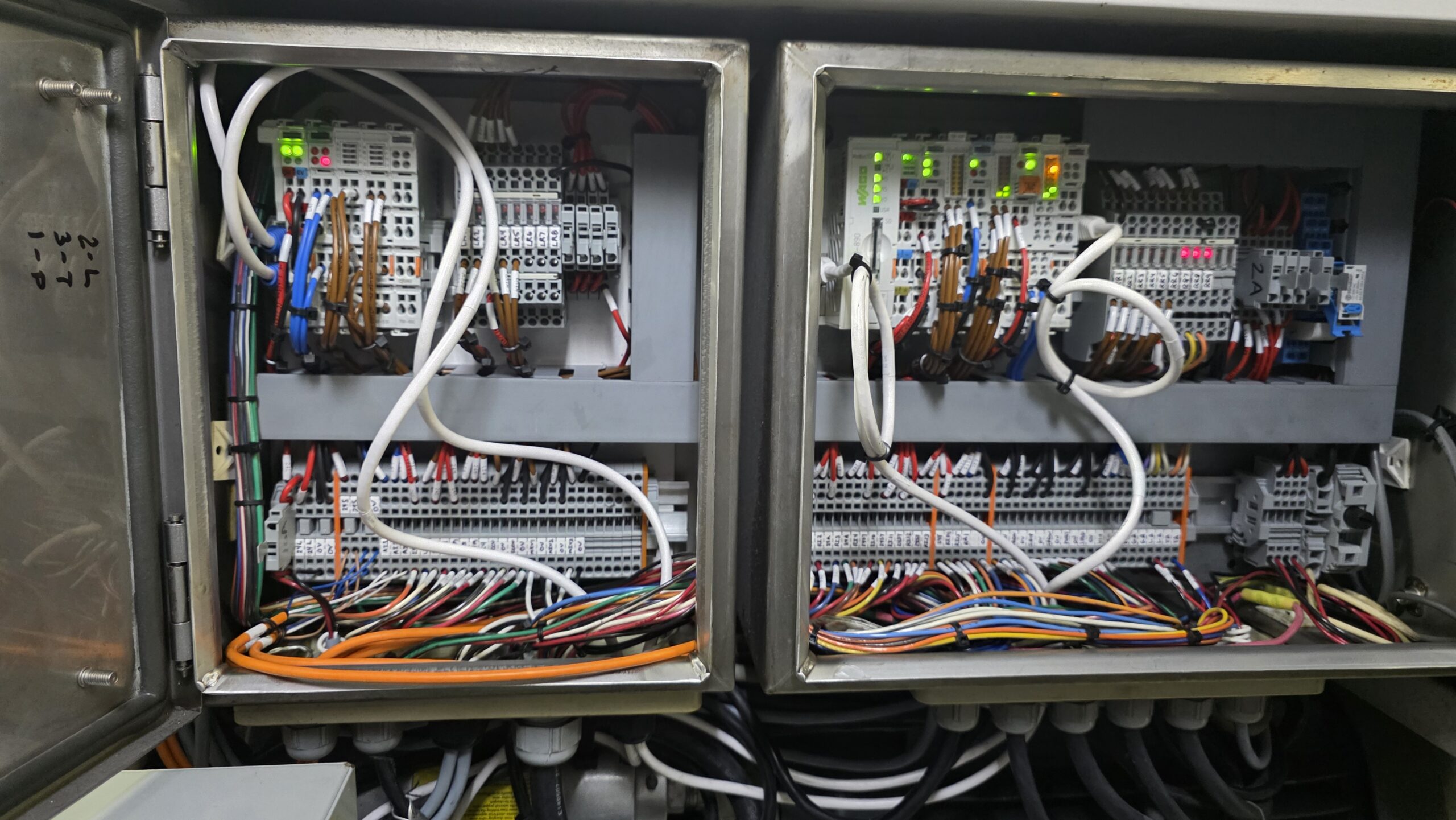
A thruster that softens the moment the crane asks for oil. A windlass that crawls while the fin load is up. A passerelle that stalls halfway because somebody else on the plant took the flow. Captains call that a hydraulics problem. Often the tank is fine and the pump still makes pressure. The part the PLC is arguing with is a bank of sections. Hydro yacht hydraulics are that hardware: Hydrocontrol valves (the Hydro nameplate crew still read on older plants), sectional and monoblock banks that sit on shared oil, and the feel the watch gets when one section takes more than its share.
Yacht Automations builds the controls around that plant. Custom yacht controls for build-outs and retrofits. Our team of electrical engineers can get it done. Fort Lauderdale and Newport. PLC panels, door systems, passerelles and boarding bridges, and the automation that ties those loads to the oil. Guest lighting can wait. A bank that starves a function mid-mooring is a charter problem, not a brochure problem.
On the 46m Trinity Yachts (2002) hydraulic control refit, the valves the new PLC had to drive were not only one brand. Hydro showed up alongside the rest of the plant. Tanks and pumps stayed. That article is the control story. This one is the Hydro side: what the watch feels when a sectional bank is the thing between a command and a cylinder, and why shared oil makes a soft thruster look like a bad pump.
What Hydro yacht hydraulics actually are on a boat
Hydro, on a yacht nameplate, usually means Hydrocontrol. Italian sectional and monoblock valves that landed on mobile and marine plants for years. The line sits under Walvoil now. Crew still say Hydro because that is what is stamped on the casting they wipe grease off of. We are not going to stamp a model number on a section in this article. We did not publish one. Photograph the nameplate on your boat. Trust that more than a faded schematic from 2002.
A sectional bank is a stack. Inlet. Work sections. Outlet. Each work section is a function, or part of one: windlass, crane, thruster, fin, hatch, a door circuit if that opening is hydraulic. Oil arrives once. Sections take what the spools let them take. If two functions call at once and the bank was never set up for that fight, one of them loses. The watch feels the loser. That is the Hydro story in one sentence.
Monoblock is the compact cousin. One casting, fewer joints, still a set of spools sharing a path. Same politics. Same stolen flow. Same spare conversation when a spool sticks and the casting is still sound. Cartridge manifolds get their own article. We already wrote how Wandfluh yacht hydraulics sit on plants we keep because the iron is good. Hydro is the bank language: sections, shared inlet, priority that either exists on paper or only in the bosun's head.
Hydro yacht sectional valve banks and shared oil
Shared plant is normal. Windlass, crane, thruster, fins on the same oil is how a lot of yachts are built. Ask which functions share a Hydro bank, and what happens when two call at once. You want that answer in the yard, not on the first Med mooring of the season.
Load sensing and flow sharing are the words vendors use. The watch uses different ones. Soft. Lazy. Jumpy. The thruster that was honest alone and then dies when the crane slews. That is not always a dying pump. Often it is a section that took the flow the thruster thought it still owned. A Hydro yacht sectional valve that is healthy and set up for the fight will feel boring under two loads. A bank that was never commissioned for simultaneous use will teach the crew to never run two functions at once. That teaching becomes the procedure. The next watch does not get the memo.
Priority sections matter when they exist. Some banks can put a function first. Some cannot without a rebuild. Do not assume the sticker on the inlet equals the logic in the PLC. Caleb (Head Systems Engineer) writes the command. Adam (Electrical Engineer) lands the conductors and measures voltage at the coil when the handle is in. Kyle (Operations) cares whether the spare section is a real Hydrocontrol part you can order, or a story from a vendor who would rather sell a package. The PLC can only drive what is wired. It cannot invent priority the casting never had.
Dirty oil will varnish a spool that was fine last season. Heat against a tank top in a Fort Lauderdale summer will cook a coil that tested fine in April. Condensation after a cold night in Newport will sit in a connector that was never clicked home. The watch sees a function that sometimes works. The engineer sees eleven volts at a twenty-four volt coil when the plant is loaded. Write the coil voltage on the drawing. Measure it hot.
Yacht hydraulic sectional valve feel the watch already knows
Bang-bang is a switch. A lock. A pin. A dump. Proportional, when the Hydro section supports it, is a dimmer. You want bang-bang on things that should seat hard. You want meterable feel on anything the crew has to feather: crane slew, thruster, fin load, a passerelle rotate if that plank is on the same plant. Mix those up and the boat feels cheap even when the steel is fine.
Stick on a Hydro section is loud. Nothing, then a bang, then nothing. People get hurt on the bang. A windlass that starts late is how you take a chain across a foot. Do not talk yourself into it just needing a tap. Tap is a workaround. Workarounds become the procedure.
Drift is quieter. Commanded closed. A dribble past the spool. The crane settles. The fin walks. The night watch finds a boarding bridge an inch off the stow they left. Command zero and feel whether the actuator is actually quiet. If it is not, stop blaming the page. The Hydro section is still the thing that moved, or failed to.
Stolen flow is the Hydro-specific cousin. Function A commanded. Function B also commanded. A softens. Crew blame the thruster drive. Or the pump. Or the oil. Photograph the bank. Ask which sections share the inlet. Ask whether anyone ever set reliefs and compensators for simultaneous use. That conversation is cheaper in Fort Lauderdale before the season than in a rush courier story mid-charter.
Hydrocontrol yacht valve coils and the spare section
A Hydrocontrol yacht valve coil is a part. Voltage. Connector. It burns, opens, shorts, gets wet. The casting can be perfect. The spool can be clean. If the coil is dead the PLC is shouting into a void. The watch sees a function that will not start. The panel shows an output. Nobody is lying. The coil is.
Keep a spare that matches. Voltage. Connector. Same family as the one fitted. Write which locker. A Fort Lauderdale distributor who still knows Hydrocontrol / Walvoil stock is a useful backup. The boat is the right place for the Saturday part. Newport the same, in season, when the window is shorter. Compare coil resistance to the spare before you condemn the section. If they match and you still have no motion, you are past the winding.
Sections get swapped. Spools get mixed. Nameplates get painted over. Trust the hardware that is on the boat. A spare coil in the locker is allready worth more than a quote that promises a new bank in twelve weeks. Kyle will ask where it lives before the yard window closes. Adam will ask whether the connector on the spare matches the one you cut the last time someone made it work with a butt splice. Caleb will ask whether the PLC is driving that coil the way the valve expects: the right current, not a random twenty-four volt bang into a proportional winding.
Do not put a bang-bang driver on a proportional coil and call it commissioned. You will get heat, a dead winding, and a crane that only has two speeds: off, and sorry. Match the output to the valve. Write it down. If the section has a manual override, know where it is, and whether the last yard left it half-stroked. A half-stroked override looks like a haunted plant. It is a pin someone forgot.
Marine hydraulic bank faults that look like a dying pump
Soft thruster with the crane up. Soft windlass with the fins loaded. Soft passerelle with anything else asking. Before you condemn the pump, ask the bank. Hydro yacht hydraulics fail in ways that mimic low pressure because the section never got the oil. A pressure confirm on the work port, not only on the rail, is how you stop guessing. We already wrote how IFM yacht sensors put that analog into the PLC. The confirm is how you know the Hydro moved.
No confirm is a cousin. Valve commanded. Nothing on the work port. Could be the coil, the spool, a ball valve someone closed and did not tag, or a pump on standby. The watch should not have to guess which. Commanded versus confirmed, in English, is how you stop guessing. If the confirm never comes, stop the motion. A silent retry loop is how you teach people to ignore the plant.
Corrosion on a connector in a Fort Lauderdale engine room will kill a coil that was electrically fine. Salt air. Heat. A plug that was never clicked home. The watch sees intermittents. The engineer sees voltage that collapses under load. Write it. Measure it hot, not at the dock with everything off.
Doors and passerelles show up here as loads, not as a second article. A hydraulic door wants a section that seats. A boarding bridge wants a section you can feather, and a pin circuit that is bang-bang on purpose. Windlass, crane, thruster, fins: same plant language. If a section is worn, condemn the section. If a spool is varnished, service it. If the nameplate is Hydro and the coil is still a catalog item through the Walvoil / Hydrocontrol channel, you are in a spare-parts conversation, not a rip-out.
Yacht hydraulic valve control when the Hydro bank stays
Yacht hydraulic valve control is the PLC talking to the coil, the confirm coming back, and the watch getting a motion that matches. You can keep tanks. You can keep pumps. You can keep a Hydro bank that still strokes. The control still has to match the valve that is there. Wrong driver, wrong confirm, wrong spare, and you have a new panel sitting on an old lie.
Fort Lauderdale is where a lot of this lands, because that is where the boats already sit. Newport the same, in season. Kyle keeps that window honest. A six-month replace-the-hydraulics quote on sound iron deserves a blunt question: why can you not drive the Hydro that is already there?
Bring a short list to the meeting. You do not need to become a hydraulics designer. You do need answers a chief can live with after the yard leaves.
- Which sections are Hydro / Hydrocontrol, and did anyone photograph the nameplates
- Which functions share the bank, and what happens when two call at once
- Proportional versus on/off on each function the watch actually feathers
- Coil voltage, connector, and whether a spare is in a locker you can walk to
- How the PLC drives that coil, and how it knows the section moved
- Which mechanicals are staying because they work, not because a package is easier to sell
- Who the crew calls after the yard, by name, not a generic inbox
If you want that conversation, send a photo of the bank, the coil labels if you can read them, and the list of functions the watch no longer trusts when something else is running. A note to kyle@yachtautomations.com is enough to start. Caleb will tell you whether the PLC can drive the Hydro that is there. Adam will tell you whether the coil circuit is even the job. Kyle will tell you whether the Fort Lauderdale window, or the shorter Newport one, can take a section you can still buy. We would rather keep a supportable bank than sell you a room of new steel you do not need. The watch gets a section that strokes, a coil they can spare, and a plant that does not steal flow from the thruster the moment the crane moves.